

A Jewel in the pristine Northeast, Assam is as rich in culture and heritage. And the traditional attire of Assam is a vivid reflection of this legacy, weaving stories of art, skill, and communal pride. The attire of both men and women in Assam represents an identity as well as culture, and the traditional forms of dresses feature a blend of grace with tradition spanning over thousands of years. For those who are intrigued by ethnic fashion, an exposure to the traditional attire of Assam is akin to being introduced to the soul of Assam. In this article, we will discuss everything you need to know about the ‘Assam traditional dress’, so without any further ado, let us begin.
The Core of Assam Traditional Dress
The famous Mekhela Chador for women and Dhoti-Gamosa for men cover the primary spectrum of traditional attire, but the cultural fabric is much richer with tribal attires, accessories, and variations.
In the Assam traditional dress, one finds so much more than just a piece of clothing. It is about respecting both culture and history as much as the skills passed down through the ages. Artisans of Assam have mastered the art of weaving using conventional materials like Muga Silk, Eri Silk, and Pat Silk. These materials are the state’s own pride, internationally acclaimed for their sheen and strength.
It’s the well-known Mekhela Chador for women and Dhoti-Gamosa for men, which form the two ends of a pendulum of ethnic Assamese costumes. But the culture is, in fact, way richer when it comes to the variety of fashion with distinct tribal wears, accessories, and much more.
Traditional Dress of Assam Female
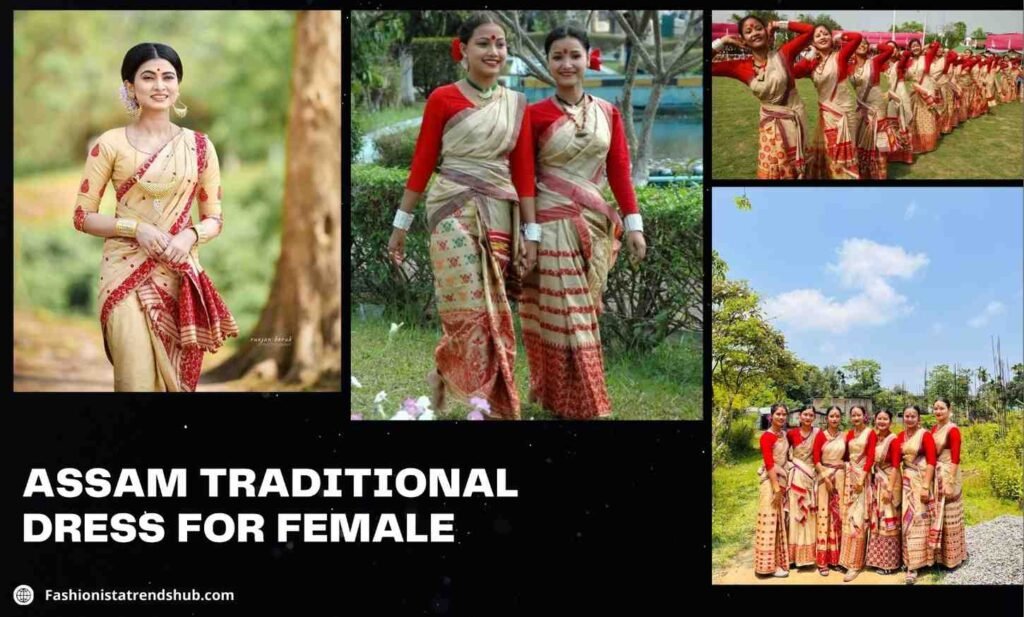
Mekhela Chador is the quintessential Assam traditional dress for women. This two-piece garment consists of:
- Mekhela: It is a cylindrical skirt with elegant pleats wrapped around the waist.
- Chador: A long piece of cloth draped over the upper part of the body in a manner unique to Assamese women.
These textiles are typically handwoven, often including images of flowers, animals, and mythological creatures. Mostly woven of Muga, Assam’s golden silk. The Mekhela Chador has a characteristic sheen and durability. Worn with this dress is the Riha, which is used as a head scarf by women (especially married) to make them look modest and traditional.
Styling the Mekhela Chador
The mekhela saree is draped from left to right, and it has pleats that look really neat. The Chador hangs over the shoulders and covers the torso, frequently paired with a blouse under it. Customary patterns include bright colors such as red, green, and yellow, which correspond to festive occasions of Bihu.
Other Significant Female Attires
Assam’s rich tribal diversity offers varieties such as:
- Dokhna: A Bodo woman’s attire, a bright, multicolored wrap-up dress worn from chest to ankle.
- Rigu and Bathormai: Beloved traditional skirts for their unique patterns and comfort, they are used daily.
- Koum Kontong: Colorful embroidered skirt of the Rabha tribe, coupled with a blouse called Kambang and beaded belts named Labok.
- Yakan Age Gasa: The black Mekhela Chador innovation of the Mishing tribe, with extensive use of dragon weave patterns by well-known intricate embroidery.
These garments pay tribute to all the individual tribal identities and contribute to the vast nature of Assamese ethnicity.
Traditional Dress of Assam Male
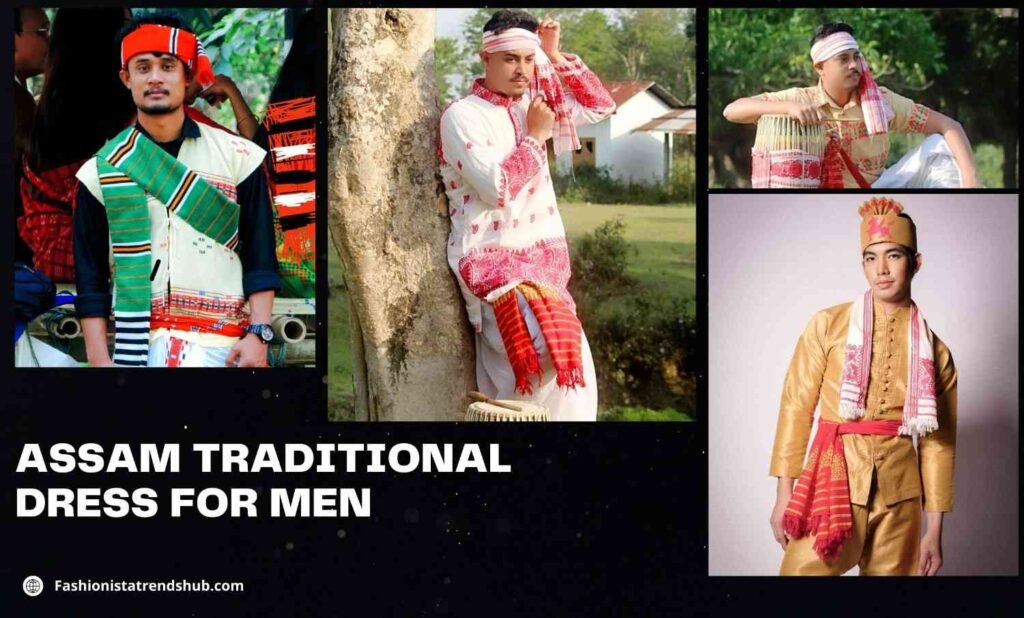
Men’s Assamese traditional dresses include the following:
- Dhoti: It’s a long piece of unstitched fabric that is wound around the waist and legs. Dhoti is essential, especially in rituals, weddings, and cultural programs, where it is used with allure.
- Gamosa: A white rectangular piece of cotton towel with indigenous patterns on a red background is a mark of the Assamese culture and traditionally worn around the neck. It’s a mark of respect and unity in Assamese social life.
Signature Headgear
Ceremonial occasions call for the Aronai, a shawl for decoration or a turban that carries symbolic weight. The tribal men are seen wearing the traditional turbans like Sgaopha or Phagri of different hues and varied patterns, each having a different social connotation.
Popular Types of Assam Traditional Dress
| Dress Name | Worn By (Gender/Tribe) | Fabric Type | Occasions | Distinct Features |
| Mekhela Chador | Female, Assamese | Muga, Eri, Cotton | Festivals, weddings | Two-piece dress with nature-inspired motifs |
| Dokhna | Female, Bodo Tribe | Silk, Cotton | Weddings, daily use | Single wrap with bright colors |
| Rigu | Female, Dimasa Tribe | Cotton, Silk | Every day, cultural ceremonies | Long skirt with traditional embroidery |
| Dhoti | Male, General Assam | Cotton, Silk | Rituals, festivals | Unstitched cloth wrapped elegantly |
| Gamosa | Male & Female, Assam | Cotton | All social functions | White with red borders, a symbol of respect |
The Historical Weaving Legacy of Assam
Muga silk weaving is a tradition that is carried forward and is passed from one generation to the next. Production and supply. The culture of silk farming is widely practiced in Assam, brought by the Tai-Ahom community, who formed a part of the major ethnic group in the state. Muga silk, which is known for its natural golden sheen and durability, signifies middle to upper traditional Assamese society.
Textile art has been preserved and passed on of women in Assam. Weaving is also thought to be a very valued skill that has helped in the survival and evolution of traditional fabric craftsmanship. From the Ahom kings’ courts to village homes, the craft binds communities and social layers. They are authentic and sustainable pieces of art that Assam handloom products are today.
Tribal Traditional Dress in Assam
Assam’s tribal communities infuse their cultural essence into unique costumes:
| Tribe | Female Attire | Male Attire | Distinctive Features |
| Tai-Ahom | Mekhela Chador, Riha | Kurta, Dhoti | Use of Muga silk, traditional weaving and embroidery |
| Bodo | Dokhna, Aronai | Dhoti, Turban | Bright colors, geometric patterns, handmade silk |
| Dimasa | Rigu, Rijamphai | Dhoti, Sgaopha Turban | White cloth garments, special turbans for ceremonial use |
| Rabha | Koum Kontong, Kambang, Labok | Dhoti-Gamosa | Beaded belts and symbolic embroidery |
| Mishing | Yakan Age Gasa | Gonru Ugon, Mibu Galuk | Black shades, cotton or silk fabric, with vibrant blouses |
- Also Read- Chhattisgarh Traditional Dress for Men and Women: Styles, Designs, and Regional Variations
Preserving Assam Traditional Dress
As the ladder of modern living keeps ascending, Indian youth are increasingly adapting to Western-style clothing. In order to preserve the cultural costumes, efforts are underway to:
- Promote Assam’s handloom industry globally.
- Encourage local craftsmen through special government and NGO programs.
- Bring modern designs into contemporary homes while not forsaking tradition.
- Create awareness about the eco-friendliness of silk fabrics and handloom silks.
Sustainability and cultural pride merge as Assam’s traditional dress remains relevant and commercially vibrant.
How to Style Assam Traditional Dress Today
Styling Assamese traditional dress so that the old is embraced in a modern fashion: Assamese traditional fashion:
- Accessorize your Mekhela Chador with gold or silver jewellery, bangles inspired by bamboo, and the traditional necklace.
- There’s a wide variety of hairstyles from slick buns to loose hair that you can wear every day.
- Fusion wear juxtaposes Mekhela Chadors with contemporary tops or jackets.
- Men to accessorize the Aronai and turban during cultural events, along with modern footwear for a refined appeal.
Traditional vs Contemporary Usage of Assam Traditional Dress
| Aspect | Traditional Use | Contemporary Adaptation |
| Occasion | Weddings, festivals, religious ceremonies | Fashion shows, casual ethnic wear, global markets |
| Fabric | Pure silk varieties (Muga, Eri, Pat) | Silk-cotton blends, machine embroidery |
| Accessories | Handmade silver/gold jewelry, traditional belts | Minimalist or fusion jewelry |
| Wearing Style | Strict traditional draping | Experimentation with draping and pairing |
| Commercial Promotion | Local markets and fairs | International exhibitions, e-commerce platforms |
Final Thoughts
The timeless charm of Assam traditional dress is a translation of culture, workmanship, and people’s spirit. The traditional dress of Assam male and female reflects the pride of heritage, hence carries out a cultural phenomenon that still grows over time but doesn’t forget its roots.
To experience Assam’s textiles and dress is to see a little bit of the soul of its people–a narrative expressed not in words but woven into every inch of Mekhela, every pleat of Dhoti, and every intricate pattern adorning this extraordinary culture.
The rich heritage of Assam is a treasure trove of silk, style, and symbolism waiting to be embraced by the world. Draping an Assam traditional attire, therefore, is not merely a fashion garb but it’s a bold statement of who you are and your art.
- Also Read About- Andhra Pradesh Traditional Dress: A Colorful Tapestry of Culture
Frequently Asked Questions
Ans. The famous Mekhela Sador and Dhoti-Gamosa.
Ans. You can style a dhoti with neat plates or wear a jacket with regional prints.
Ans. They wear embroidered skirts, upper cloth, along with traditional accessories.
Ans. Yes, there are smaller versions of the adult dresses.
Ans. Easy to manage Mekhela Chador, or just go for the classic salwar kameez