
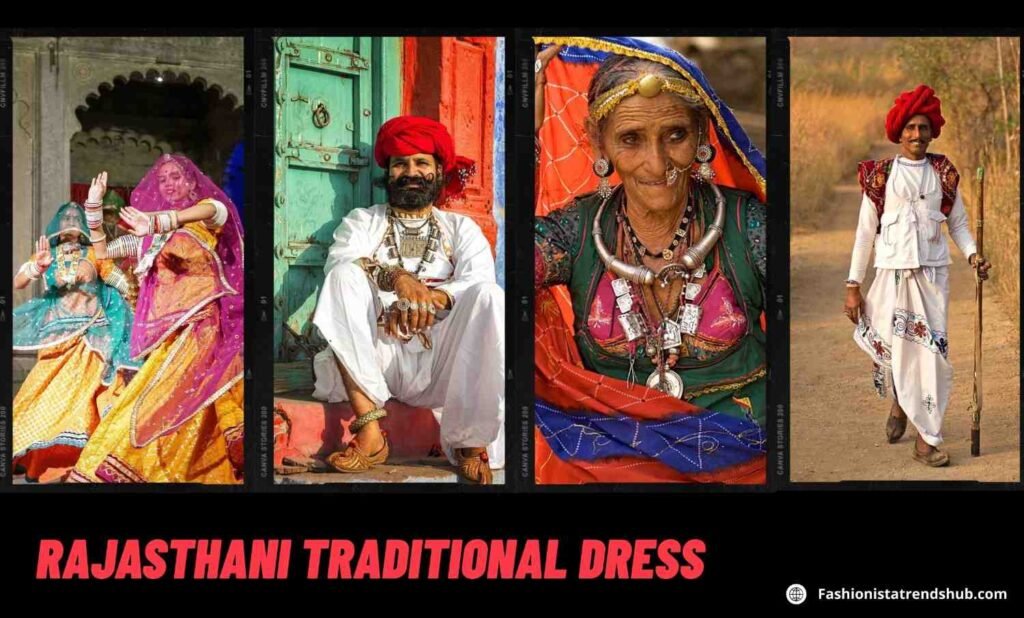
Rajasthan is not just a land of sand and fortresses — it’s a living canvas of fabric, colour, and identity. Rajasthan’s classic dress has a saga hidden in each fold and drape. In this article, you’ll find out how Rajasthani Traditional Dress is special, compare male and female styles where they originated, and what makes them different, regional motifs, and tips to wear it with respect and style!
What Makes the Traditional Dress of Rajasthan So Popular?
Why does Rajasthani cloth attract all, traditional wear for men and women? For a better understanding of what the traditional dress of Rajasthan entails, let’s break the look down into factors – garment types, prints & technique, accessories, and significance behind colours & shapes. They all come together and form the outfit which can express your status, region, climatic condition, occasion, etc.
Rajasthani Traditional Dress : Components & Styles
To perhaps better understand as much as possible about the traditional dress of Rajasthan, the costumes are divided into male and female. Every part develops locally, but they are all comprised of shared elements. Here are the elements of Rajasthani traditional dress male and female Let us take a look at a quick overview,
| Segment | Women Traditional Dress | Men Traditional Dress |
| Upper Wear | Choli / Kanchli / Kurti – a fitted blouse, often richly embroidered. | Angrakha / Achkan / Bagalbandi – a wrap or tunic style garment. |
| Lower Wear | Ghagra / Poshak – long flowing skirt, flared, matched with blouse. | Dhoti / Pyjama – loose dyes, comfortable for hot climate. |
| Veil / Draped Piece | Odhni / Dupatta – draped over the head or shoulders, completes the ensemble. | Pagdi / Safa (turban) – symbol of status, protection from sun, identity marker. |
Rajasthani Traditional Dress for Women: Layers of Gracefulness
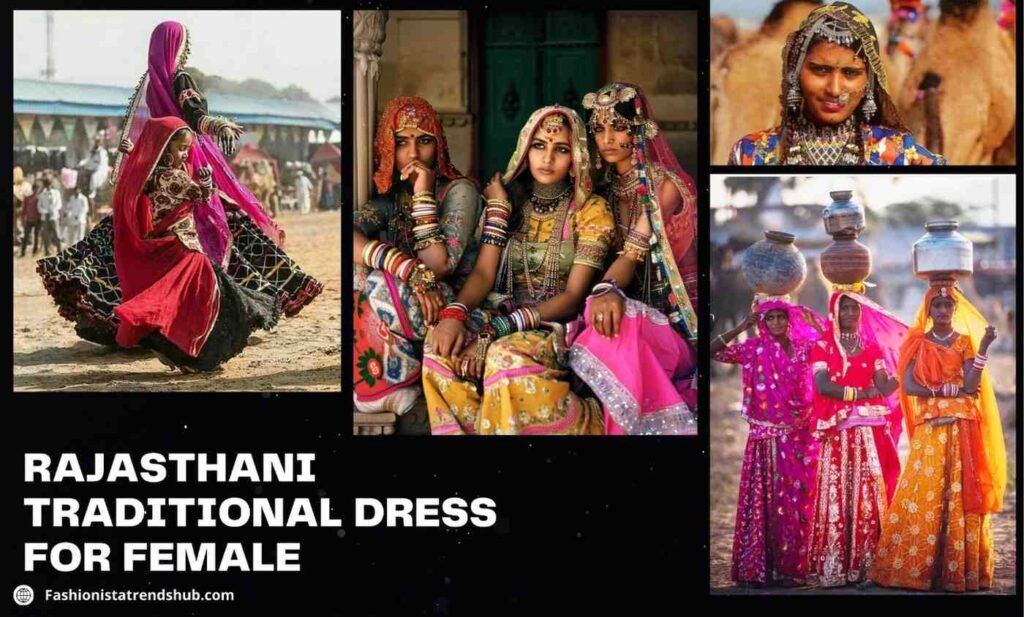
Women in Rajasthan wear long, ankle-length skirts known as ghagras and short blouses or brassieres called cholis. There was the ghera of ghagras, which flares dramatically toward the ankle, and often incorporates multiple pleats, wide borders, and nature infiltrations — flowers, leaves, waves. Materials such as cotton, georgette, chiffon, and silk are selected based on climate and festivity.
A piece of cloth called an odhni is drawn over the ghaghra over the shoulder, head, or face. It is frequently 2.5 to 3 meters long and 1.5 to 2 meters wide. Prints like Bandhani, Leheriya, Tie‑Dye, and Laharia keep coming in a never-ending cycle. Borders are embellished with Gota‑Patti, mirror work, embroidery, beads, and shells, as well as sequins.
Jewellery completes the look. Elaborate earrings (Jhumkas), nose rings (Nath), head pieces (Maang tikka, Rakhdi), waist chains (Kardhani), arm bands or Bajubandh, anklets(Waist chain/ Kamar bandh), Belt and feet adornments Payal, Toe rings(Bichua) are common. For tribal and rural women, for instance, silver or alloy ornaments are their choice; wealthier families usually wear gold or Jadau sets. Wrist‑bangles (chura), finger rings, and other minutiae also catch the eye.
Rajasthani Traditional Dress Male: Strength and Symbolism
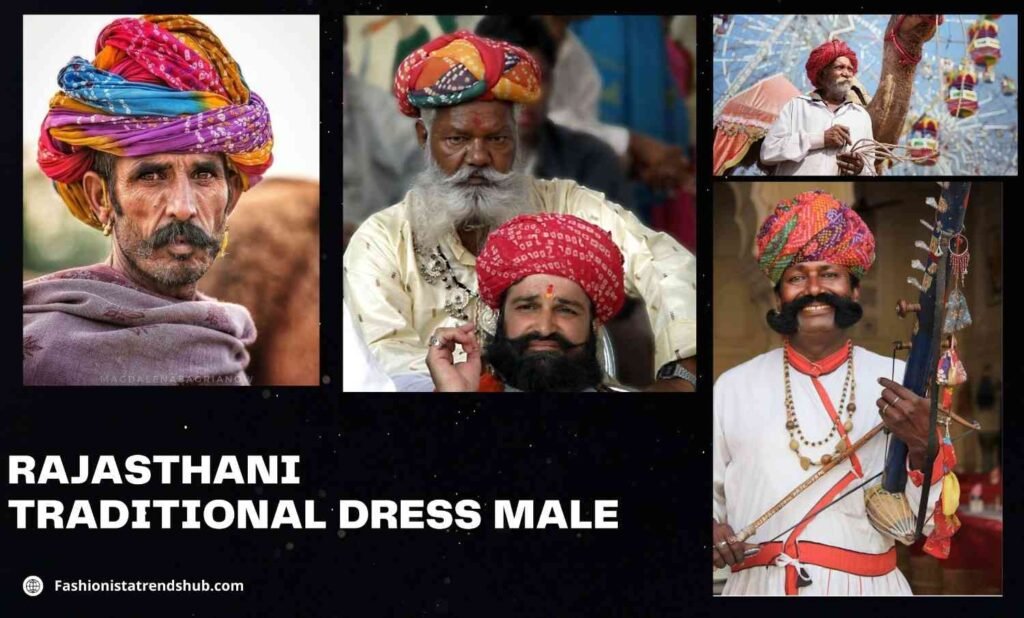
In Rajasthan, men’s attire finds a balance between comfort and statement. Dhoti or pyjama constitute the lower portions: dhotis are folds of loose cloth that are wrapped and tucked, or trouser garments (see also: Lungi). Both may be made of cotton, particularly white or light pastel colours for everyday wear.
Upper wear includes angrakha, kurta, and achkan, to name a few. Angrakhas for royalty or ceremonial purposes are ankle‑length, while varieties fit for everyday wear may be waist‑length. They usually have tie‑closures or side laces instead of buttons.
Symbolically and practically, the pagri or turban is of immense importance. Colours, patterns, and style of wrapping signal region, caste, and occasion — bright, multi‑coloured ones for celebrations; more muted for mourning or everyday wear. M – width: 2.25″, horizontal length (left to right): 8″ – vertical drop length (middle of ear piece to tip): 6.5″ L – width”, horizontal length left to right” -vertical drop length(middle of ear piece to tip):7.75″. The entire ensemble is capped by mojari (or jutti)—footwear made from leather, with embroidery or some kind of ornamentation In addition, men also wear belts(patka or kamarbandh), necklaces or earrings.
Attire of Rajasthan: Everyday vs Special Occasion
On regular days in Rajasthan, clothing leans toward comfort and practicality. Cotton ghagra‑choli sets for women; cotton kurtas or pyjamas for men. Colours may be lighter; ornamentation minimal. Footwear is simple; jewellery might be modest.
In contrast, festivals, weddings, or important ceremonies call for full regalia. Women wear richly embroidered ghagras, heavy odhnis with ornate borders, and full sets of jewellery. Men wear angarkhas or Bandhgalas with matching turbans, patkas, perhaps decorative shoulder cloths, and more elaborate footwear. Turbans in festive mode may have decorative brooches. The variation between daily and ceremonial dress shows how the clothing of Rajasthan responds to both function and display.
| Feature | Everyday Rajasthani Attire | Ceremonial / Festive Attire |
| Fabric | Cotton, lighter cotton blends; minimal decoration | Silk, velvet, more ornate fabrics with heavy embroidery, zari, gota |
| Embellishments | Simple prints, less mirror work, fewer accessories | Rich mirror work, beadwork, sequins; heavy jewelry, elaborate odhni, brooches, etc. |
| Colour scheme | Moderate colours, softer tones suited to desert heat | Vivid contrasts; bright reds, deep blues, gold accents |
| Components | Basic ghagra‑choli, short Angrakha or plain kurta, basic safa | Rajputi poshak set, Bandhgala / Jodhpuri suit, heavily embroidered Angrakha, elaborate pagdi |
Regional Prints & Techniques: The Core of Rajasthani Attire
Rajasthan is so much about prints and dyeing techniques. Without garments, the clothing of Rajasthan has no sense of place.
Rajasthani traditional dress have Bandhani (tie‑dye), which creates dot‑patterns by binding the cloth in small places while dyeing. Leheriya translates to “waves,” referring to the wave or diagonal-stripe pattern that is created by resist-dyeing it after crinkling. Laharia, Tie‑Dye, Mothra, and Chundri are near relatives or variants. Bandhani origins can be traced to Gujarat and Rajasthan, even today, artisans below in cities such as Jaipur, Udaipur, Kutch, etc.
When Bandhani dots or Leheriya waves appear on ghagras, odhnis, and turbans, the effect is celebratory. Borders and trims: Gota‑Patti lace, mirror work (shisha), beadwork, shell work. Primary colours – red, yellow, blue, green – are typical; combinations of contrast (eg, red and yellow or green) please the eye. Natural dyes often resulted in a softer shade; the artificial versions tend to be brighter.
Rajasthani Traditional Dress Name & Etymologies
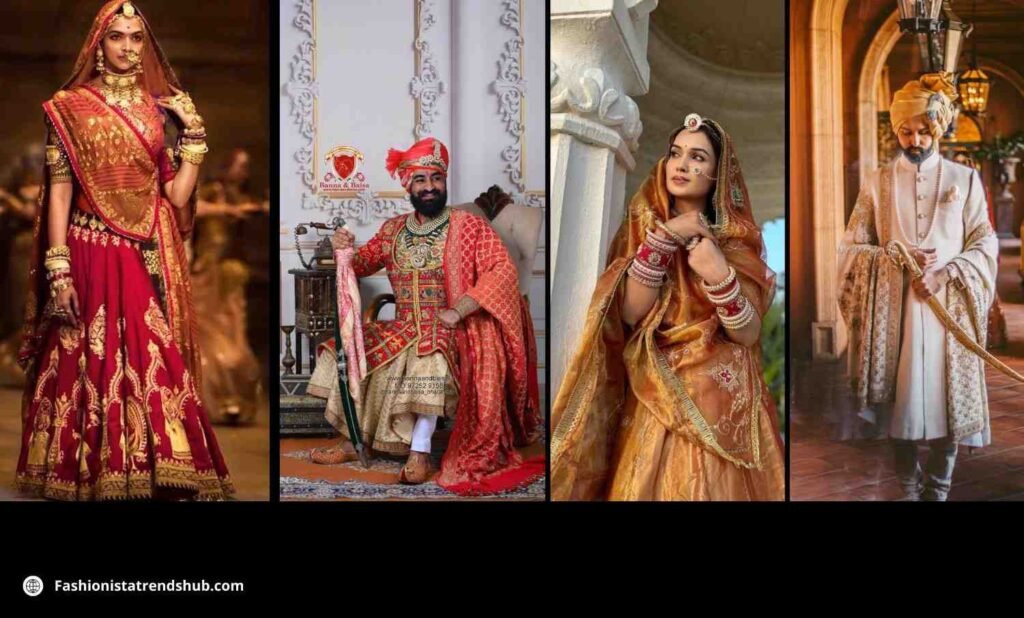
Some names have so much significance, representing not only the garment itself but a heritage, tradition, or purpose. The list of traditional attire of Rajasthan comprises of:
- Rajputi Poshak: A traditional full‑dress women’s set (ghagra, choli, odhni), particularly worn by Rajput women with generally costly material and heavy work used for ghagras, along with a long, traditionally made wrapper known as the odhni.
- Angrakha: Its name, “Angrakha,” literally means that which provides a body-hugging, enveloping feeling because its design involves inner or upper front flaps working as panels and has been present since the past of Rajput men who are gallant.
- Bandhgalaa: Also known as Jodhpuri suit in certain situations –It evolved as a formal dress with the collar closed (“bandh gola”), blending royal look to coats and blazers.
- Ghotra / Pagri / Safa: Turban or headgear styles are tied differently in different regions, and are also called by different names.
What is the Traditional Dress of Rajasthan: Colours, Symbols and Social Messages
Colour in Rajasthani traditional dress is not there just to look pretty — it expresses occasion, community, and mood. Red and saffron are commonly seen at weddings and festivals; white may indicate mourning or less festive events. Contrast of the colors creates a dynamic; monochrome may work for daily use.
Prints & motifs may be repository-keepers of local stories – waves for desert dunes, dots for tied droplets of water (in Bandhani), mirrors flashing back the sun. Styles of drape or type of brocade may mark caste or region.” Jewel material (silver, gold) and specific types of jewelry/nosering may indicate affluence or tribal membership.
Rajasthani Traditional Dress Vs Modern Trends
Traditional clothing does not remain sealed in a time capsule. Designers often reinvent the ghagra‑choli as shorter skirts, blouse patterns change, fabrics are lighter, and colours experiments more brazen. Men’s Bandhgala jackets receive contemporary silhouettes; fusions can even be tried with the turban. The dupattas/odhnis can be draped as a scarf like a shrug, or even a cape with fusion wear.
Plus, ready‑to‑wear styles attract those beyond the borders of Rajasthan or a younger consumer who likes the look but wants comfort. These cuts either do away with heavy embroidery or use work that can be easily washed out, and play around with the length/fall of skirts.
Why is Rajasthani Traditional Dress a Timeless Outfit?
The traditional dresses of Rajasthan survive because they balance identity and environment with creativity and versatility. War with sun and sand inspired design (loose pleats, breathable fabric, odhni for head & face). Modesty, Respect (veiling, jewellery as a symbol) were determined by cultural values. Handwork — bandhani, mirror work, Gota art — transmits techniques through the generations.
Because young people reinvent the style while keeping at its heart (flair, color, ornamentation), it stays alive and thrilling — not just museum exhibits but street festivals, film shoots, weddings.
Concluding Thoughts
As a fusion of artistry, sense of climate, storytelling, and adaptability, the challenging Rajasthani traditional dress sparkles like nothing else. The Rajasthani dress for both men and women is layered — skirt, choli, odhni, turbans, angarkha, Bandhgala, jewellery — each woven with meaning, identity (from religious to ceremonial), region, and occasion. The beauty of the clothing of Rajasthan attracts not just for its colors but its depth.
Though many of these styles have centuries’ worth of history, the tradition never gets static: prints, cuts, lengths, and ornamentation mutate. If you want to wear traditional or just gaze at it, the costume of Rajasthan has depth beyond cloth.