
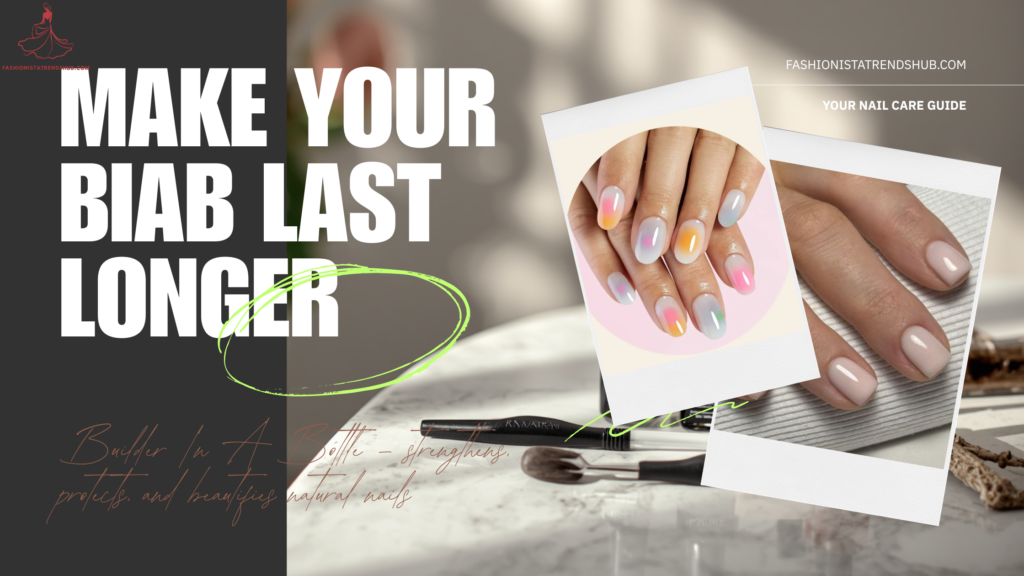
Your nails should not be chipped, peeled or thinned by harsh treatment. BIAB nails do just that! The niche nail treatment solution recently known as Builder In A Bottle has quickly become one of the UK’s—and the world’s—most popular nail treatments. BIAB can do both: longer lasting nails that are stronger and healthier nails, no matter if you have brittle nails or not.
Within this full guide, you will find out the biab nails meaning, how to apply them step-by-step, comparison with gel and acrylic nails, various types of biab nails, typical BIAB nails cost and much more to help you make an informed decision.
What Are BIAB Nails?
Builder In A Bottle (BIAB) is a soak-off builder gel formula that strengthens and protects natural nails, and provides a shiny, polished appearance. It was originally created by Brighton nail brand, GelBottle Inc. by Daisy Kalnina. Since its inception, there have been scores of other brands trying to introduce their own builder-in-a-bottle but, The GelBottle will always be the standard.
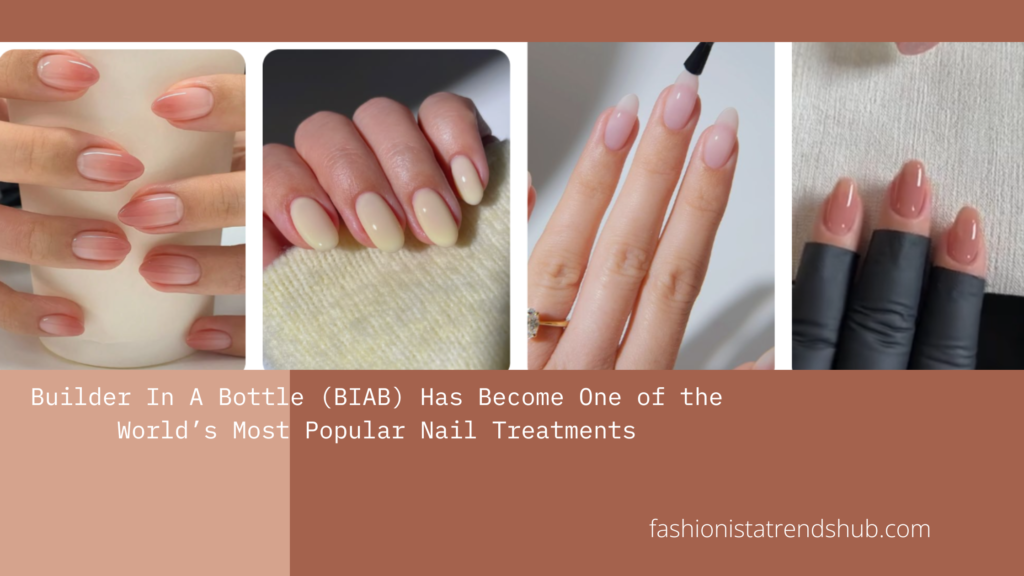
BIAB is thicker and more structured than usual gel polish. Binds directly to the natural nail plate, offering flexible yet hard-wearing surface, supports nail strengthening and encourages natural nail growth. It’s between a regular gel manicure and an acrylic manicure in simplicity, providing nail strength without compromising nail health.
Consider it to be a protective sheath that protects your nail without hindering it. Sel-levelling characteristics are included in the formula, meaning that it will even out surface imperfections without intensive filing. Therefore, more patients with compromised or weak nails are seeking out the BIAB treatment for healing.
Benefits of BIAB Nails: Why Everyone Is Making the Switch
With the move to better nails, there’s been a tremendous demand for BIAB. Let’s take a look at the main advantages which make it a good choice.
1. Powerful Nail Strengthening
Each nail is individually coated with a structured gel layer by BIAB that strengthens weak, peeling or brittle nails. In the long run, frequent BIAB infills can help regenerate your natural nail under the infill itself making it stronger and healthier. This is much more than a cosmetic treatment, so it’s a true nail strengthening treatment.
2. Supports Natural Nail Growth
Due to BIAB’s protection against nail breakage, many clients experience much quicker growth of their natural nails throughout the BIAB process. The protective coating prevents cutting off the nail growth that is caused by the chips and snags. Many nail techs refer to BIAB as “the best route to grow nails without extensions.Nail techs can also say that it is the best way to grow your natural nails without extensions.
3. Long-Lasting and Chip-Resistant
A good, well-done and well-maintained BIAB manicure will stay without lifting or chipping in three to four weeks. The thick viscosity and adhesion of the builder gel to the natural nail gives this durability. As a result, busy lifestyles where getting to the salon regularly is not possible are the perfect match for BIAB.
4. Gentle Removal
BIAB is a soak-off product as opposed to acrylics which need harsh filing, prying or strong liquid solvents to remove. The nail tech removes the top coat, breaks the seal, wraps the nails into the cotton that has been soaked in acetone and foil for the nails to be removed without damaging them. This method is better than acrylic removal in maintaining under-side of the natural nail.
5. Versatile Finish
Clients will be able to wear BIAB as an overlay for sheer or as a natural look or add gel polish on top for full colour. Also, nail techs may use it under any kind of gel nails, making it a remarkably versatile under any type of nail design.
Types of BIAB Nails: Finding Your Perfect Style
The look of BIAB applications varies. It is important to know the various types so as to make the appropriate reservation and have reasonable expectations.
BIAB Overlay
BIAB overlay is a type of builder gel that is simply overlaid on your natural nails without extensions. It is ideal for clients who wish to strengthen the nails and do not wish to add length to them and not have them look ugly. The overlay is light, thin, and just as natural looking as possible; perfect for BIAB beginners.
BIAB with Gel Polish
BIAB is a good and structured base and is topped with gel polish in this popular combination. This allows for a manicure that lasts much longer than a regular gel manicure, with a colored appearance. Additionally, the BIAB base does not come in contact with the natural nails directly by the gel polish, thus minimizing the chance of staining and drying out of the natural nails.
BIAB Gel Overlays for Extensions
When nail techs use gel overlays, they have to keep using BIAB as the base to provide support for short extensions. These gel overlays will give a little of the length, and will result in a natural look. BIAB products are more appropriate, however, for short to medium lengths as they are less structurally supportive for dramatic extensions.
Infill Service
Your natural nail will start to grow, and you will start to see a gap where the cuticle area of your nail is with the nail. An infill appointment is filling this void with new BIAB that will seamlessly fit into an application already in place. Most clients schedule infills based on two to three weeks, in order to make the nails stay fresh.
BIAB vs Gel vs Acrylic: Which One Is Right for You?
The option of choosing between BIAB, gel and acrylic will depend on the condition of your nails, your lifestyle and the aesthetics you are looking for. You can easily see the difference from the comparison table below.
| Feature | BIAB | Gel Polish | Acrylic |
| Strength | High | Medium | Very High |
| Flexibility | Flexible | Flexible | Rigid |
| Natural Look | Yes | Yes | Less Natural |
| Removal | Soak-Off | Soak-Off | Filing/Prying |
| Nail Damage | Low | Low-Medium | Higher Risk |
| Extensions | Short Only | No | Yes |
| Longevity | 3-4 Weeks | 2-3 Weeks | 4-6 Weeks |
BIAB is in the middle of the “sweet” zone as you can see from the table. Stronger and lasts longer than gel polish and can be used without the damage that occurs with acrylic. BIAB is definitely the best choice for nail care and appearance, when compared to Gel and Acrylic.
Clients choose acrylic nails whenever they need significant length or structural repairs, especially when they want added nail length. Gel polish is used for clients who are looking for a lighter, shorter-wear. Finally, the best option for you will depend on your nail objectives.
Step-by-Step BIAB Application: How a Nail Tech Does It
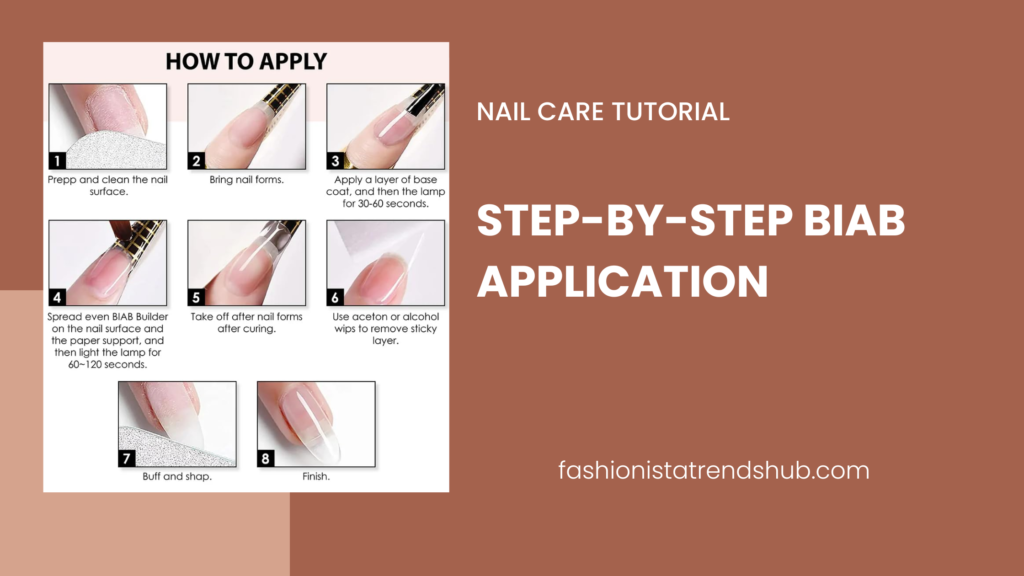
Being aware of the Step-by-Step BIAB Application process will help you know what to expect at the salon, and why each step is important.A professional nail technician follows this process carefully to ensure the nails remain secure, long-lasting, and safe.
Step 1 — Nail Prep
The first step the technician will take is to peel away any previous polish or product. Then they cut and mold the nails to the length of the client’s desire. Light buffing makes the nail plate not shiny, thus allowing the BIAB to grip the nail plate. The key to a lasting application depends on how well prepared this stage is that separates it from an application that leaves in 7 days’ time.
Step 2 — Cuticle Work
The tech works back and delicately combs through the hair cuticles. It is imperative this step is taken because leaving cuticle skin on the nail plate causes it to “lift. Most professionals use a nail dehydrator and nail primer to dry the surface of the nail and remove the oils and moisture from the nail surface.
Step 3 — Base Coat Application
The first coat is thin layer of BIAB base coat. The technician then cures it under UV or LED lighting for 60 seconds. This is the base coat which provides the glue that secures the builder gel to the body.
Step 4 — BIAB Builder Gel and Apex Building
The technician then puts into one or two coats of BIAB builder gel. At this point they concentrate on the apex building – the subtle arch in the gel, which is located about 2/3 from the cuticle to the free edge of the nail. The apex is very important, as it will evenly distribute the pressure throughout the nail, which will stop breaks and increase the strength of the nail.
The nail technician cures each layer separately under the LED lamp and then cures them again.
Step 5 — Shape and Refine
Once cured, tech files and shapes nail to the desired shape, such as square, round, almond or oval. Light buffing will give a smooth, seamless finish by removing any rough edges.
Step 6 — Top Coat and Cure
A gel top coat is used for sealing. The final cure with LED lamp sets the entire system very hard and gives it a gloss. The nail technician can add color to the top coat by applying a layer of gel polish to the client’s nails before applying the top coat.
BIAB Nails Cost : What to Budget in the UK, US, and India
BIAB nails cost varies by country, city, salon reputation, and the service type you choose. Whether you are booking in London, New York, or Mumbai, the price reflects local living costs, product availability, and technician expertise. The table below gives a clear breakdown across all three markets so you can budget accurately before you book.
| Service | UK (£) | USA ($) | India (₹) |
| BIAB Overlay (Natural Nails) | £25 – £45 | $40 – $70 | ₹1,200 – ₹2,500 |
| BIAB with Gel Polish (Colour) | £30 – £50 | $50 – $80 | ₹1,500 – ₹3,000 |
| BIAB with Short Extensions | £40 – £60 | $65 – $100+ | ₹1,800 – ₹3,500 |
| Infill / Rebalance Appointment | £20 – £35 | $30 – $60 | ₹800 – ₹1,500 |
Maintenance, Aftercare, and Removal
Good aftercare can prolong the life of your BIAB manicure, and preserve your natural nails under it.
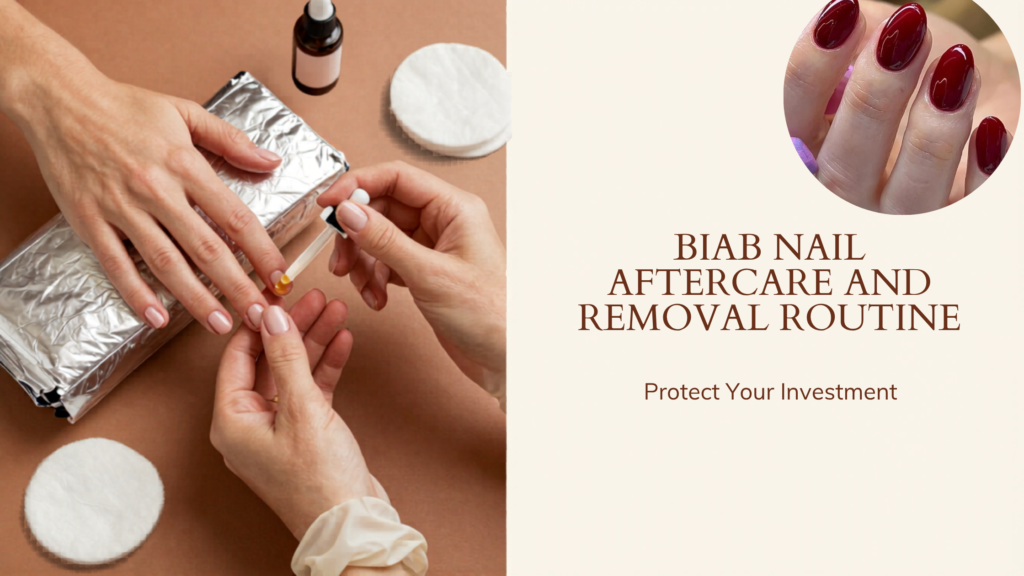
Use cuticle oil daily to the edges of the nail. This will maintain the flexibility of the skin and avoid lifting at the edge of the cuticle. Use gloves when washing up or dealing with hard chemicals, as time passes, the seal will become weaker if exposed to water for long periods. Using your nails to open objects or scrape surfaces can damage the tips and weaken your BIAB manicure.
When it comes to getting rid of it, always go to the experts. A trained nail tech cuts through the top layer to pop the seal, dips cotton pads in acetone and then puts foil over each nail for 10-15 minutes. The softened BIAB then smoothly detaches from the natural nail without harming the nail. Forcefully peeling or removing BIAB at home severely damages the nails and slows down the healthy nail growth achieved over several weeks.
Conclusion
BIAB nails have truly revolutionised the nail care industry. BIAB offers beauty and nail health all in one treatment, without having to make a choice between the two. The formula thickens weak nails, promotes the growth of natural nails, doesn’t chip like acrylics do and comes off without damaging the nails. BIAB fits your needs – from a gel overlay, to a full set of colour, to a short extension.
The BIAB application is step by step and the apex building technique allows you nails a professional structure which regular gel polish can’t compare. BIAB works best in the nail care battle, being dabbed with a bit of both sides compared to Gel and Acrylic. With the competitive price of the BIAB nails, and the increasing number of certified salons available in the UK, it is definitely time to give it a go! Book with a qualified nail technician, adhere to the after care instructions and enjoy the benefits that Builder In A Bottle provides.
Also Check: Spring Nail Colors: Top 10 Shades, Trends & Fresh Manicure Ideas (2026)
FAQs
There’s no denying that BIAB has a superior performance than regular gel polish for most. It is thicker, has a more structured texture and will last longer, usually 3-4 weeks compared with 2-3 weeks for gel polish. Plus,BIAB fortifies the natural nail underneath the product, regular gel polish only covers it. If your nail health and longevity are important to you then BIAB is preferable.
Yes but not to the same extent as professional application. BIAB adheres properly and lasts longer when you cure it under UV or LED light, build the correct apex, and prepare the nails properly beforehand. Beginners trying DIY BIAB at home often face issues like lifting, uneven thickness, or improper removal, which can damage natural nails. It’s best to go to a trained and certified nail technician.
When done by a professional, a BIAB manicure will last 3-4 weeks with little chipping or lifting. This of course will vary according to your lifestyle and aftercare routine, as well as your natural nail growth. Individuals with fast nail growth may need infill appointments every 3-weeks and see resurgence of nail growth.
When applied and removed correctly by a qualified professional, BIAB does not damage natural nails as much as acrylic systems. Indeed, many of the clients see their nails becoming stronger and longer once they’re using BIAB regularly. The biggest issues are caused by being removed incorrectly, for example by peeling the product off the natural nail at home, removing layers from the natural nail.
The price of a BIAB overlay in the UK ranges from £25 to £45. This will be sold at £30 to £50 when gel polish is added on top. The price of short BIAB extensions is between £40 and £60. The price of infill appointments is typically in the range of £20-35. The cost of services will differ depending on the salon, the city’s location and experience of the technician working there — city salons will have higher prices than independent nail techs.