
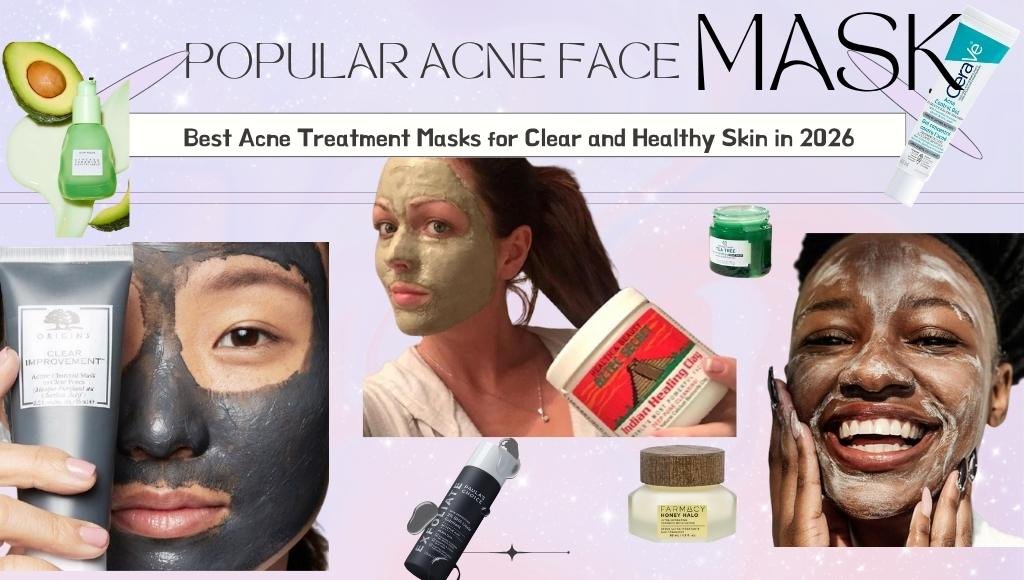
Acne is one of the most common skin conditions in people all around the world, and it can develop in any person at any age on any complexion around the world and it affects everyone regardless of age, skin color or background. Breakouts can appear as hard, black bumps around your nose, painful cysts on your jaw, or a whole rash of pimples just before a socially awkward occasion. Luckily, the whole skin care industry has evolved. The most effective face masks for acne are today based on ingredients and provide targeted treatment that comes close to the efficacy you can get from a clinic’s treatment, in the comfort of your bathroom.
This guide covers the causes of acne, the best skin type and acne mask for all breakouts, and the dermatologist-approved best face masks for acne in 2026.
Disclaimer: This article is meant for educational purposes only and is not intended as a substitute for professional medical advice, diagnosis or treatment. Seek a dermatologist for ongoing or irritated acne problems.
What Is Acne?
Acne is a long-term inflammatory condition of the skin caused by overproduction of sebum (oil), dead skin cells and bacteria clogged skin pores. The skin contains sebaceous glands that produce oil to keep it moisturised. which can overproduce oil, particularly with hormonal changes. A combination of excess sebum, dead skin cells and Cutibacterium acnes bacteria builds up within a pore, causing inflammation. When this happens, you start to notice acne on your face, back, chest and shoulders, where oil glands are most prevalent.
Knowing this about acne is important because it will directly influence the treatment you select. There are several types of breakouts and several different types of masks for each.
Types of Acne: Know What You Are Dealing With
Dermatologists have classified acne into two categories: non-inflammatory and inflammatory. In each case, their reactions to treatment are different, such as face mask therapy.
Whiteheads- open pores that are closed and filled with dead skin cells.
Blackheads —Open pores clogged with oxidized sebum.
Papules — small red tender bumps due to inflammation of the follicles.
Pustules are lesions that are filled with pus and are often referred to as pimples.
Nodules: Large solid painful lumps well under the skin
cystic acne– Deep, pus-filled cysts that are the most likely to leave scars.
Mild acne — whiteheads and blackheads — Regularly exfoliating or clay masks are effective for treating mild acne (whiteheads and blackheads). Severe acne (nodules and cysts) may require some prescription treatment and specific mask application.
What Causes Acne Breakouts?
There are several factors that have been well documented that can trigger or exacerbate acne.
The number one trigger is hormonal changes, such as the androgens that spike during puberty, menstruation, pregnancy and perimenopause that trigger the body to produce too much sebum.
When a person is stressed, cortisol levels will go up, which will cause more oil production.
Studies have found that even in some, diets high on the glycemic index and individual drivers like over consumption of dairy food contribute to acne breakouts, and there is an association between the frequency of breakouts and eating high-glycemic foods and dairy, according to several clinical studies.
Pores can be clogged even more by heavy or comedogenic sunscreens, humidity and pollution.
Furthermore, bacteria are more likely to grow in the acne when the barrier function of the skin is compromised. Understanding your own tendencies is the first step to finding a breakout treatment that will work for you.
Treatment by Using Face Mask: How It Works
Face masks for acne are short contact, high concentration treatments. A mask will stay on your skin for 10-20 minutes, which means that the active ingredients are able to penetrate the pore lining further than a daily cleanser that rinses off after a few seconds. This prolonged contact time gives cosmetics with active ingredients such as salicylic acid and benzoyl peroxide a more effective action than they could have when formulated as washes.
Acne face masks will be used twice to three times a week, and they will provide you with the following benefits:
Activated clay or charcoal is useful for obtaining a deep cleanse and extracting impurities and excessive sebum.
Exfoliating away dead skin cells using chemical exfoliants such as salicylic acid etc.
Helping by reducing acne caused bacteria using antibacterials like tea tree oil or benzoyl peroxide.
It soothe and reduce redness and irritation, through calming botanical extracts.
It’s not about how much or how loud, it’s about how consistent. Two sessions of facials a week, for four to six weeks, will be more effective than trying to do them every day, since this can disrupt the skin barrier and aggravate acne.
Best Face Masks for Acne: 2026 Dermatologist-Backed Picks:
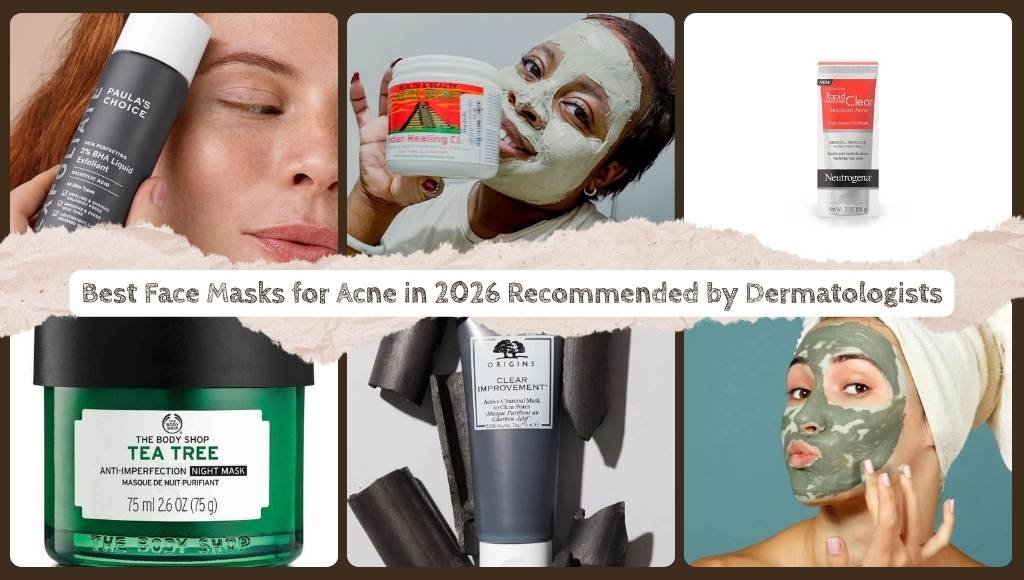
The subsequent products feature clinically-proven ingredients and dermatologist recommendations with Prices and widely available on amazon plus these all are OTC (over-the-counter) so no prescription is required:
1. Paula’s Choice Skin Perfecting 2% BHA Exfoliant mask
When it comes to acne-prone, oily and combination skin, salicylic acid is the top choice of ingredients. Priced at ~$35 or ₹12,00-₹2900 on Amazon,it is a beta hydroxy acid, which helps to penetrate through the oil filled pores, dissolving dead skin cells from the inside out, thus making it uniquely effective at treating blackheads as well as whiteheads. Apply thin layer on face, keep for 10 mins and rinse. Dermatologists mostly recommend this formula because its gentle pH, non-irritating base and fast visible results help refine pores and improve skin texture.
2. Aztec Secret Indian Healing Clay Mask:
The clay mask has evolved a cult following in the wake of few products. Priced at approx. ~$12 / ₹1,000, it combined with apple cider vinegar, 100% calcium bentonite clay forms a “deep pore treatment” that absorbs the sebum, environmental toxins and dead cells. It is one of the best face masks for acne prone skin, which is always oily. Apply it once a week for 10 to 15 minutes – no longer or it will over-mask and cause too much oil production.
3. Neutrogena Rapid Clear Stubborn Acne Daily Leave-On Mask
This easy-to-find drug store product contains 10% benzoyl peroxide, which is a powerful treatment against moderate to severe inflammatory acne. This mask priced at ~$10 / ₹830.
Benzoyl peroxide works directly against Cutibacterium acnes (C. acnes) bacteria to help them get to the root of the problem and eliminate pustules and papules quickly. Do be sure to use a non-comedogenic and fragrance free moisturizer after use as it can be drying. Keep in mind that benzoyl peroxide will stain fabrics, so use a clean towel after you’ve applied it.
4. The Body Shop Tea Tree Anti-Imperfection Mask ₹1,800 / ~$22
Tea tree oil is naturally anti-bacterial and anti-inflammatory, but not the harsh chemicals found in synthetic products. The cost of this mask is ₹1,800 / ~$22. This formulation includes it with salicylic acid to provide a double-action treatment, clearing congestion and targeting bacteria. It is ideal for mild to moderate acne and won’t irritate teenagers or young adults beginning an acne treatment program. Cover with it 2-3 times a week as an integral part of the skin care routine.
5. Origins Clear Improvement Active Charcoal Mask
Activated charcoal is like a magnet that attracts impurities, drawing the particles of pollution, excess sebum and dead cells to the surface. When mixed with white China clay, this mask offers a complete once a week scrub for oily and combination acne-prone skin. The Origins Clear Improvement Active Charcoal Mask is priced at ~$28 / ₹2,300. The rinse-off formula is lightweight, allowing it to seamlessly fit into any regimen, while maintaining a well-balanced formula that doesn’t aggressively remove moisture from the skin.
Best Face Masks for Acne-Prone Sensitive Skin
A careful balance is required for highly sensitive skin that is prone to acne. The mask should be effective in treating breakouts without causing any redness, stinging or inflammation. Seek products containing lower concentrations of active ingredients and ingredients that support the skin barrier, such as niacinamide, zinc or oat extract, which do not have a strong fragrance.
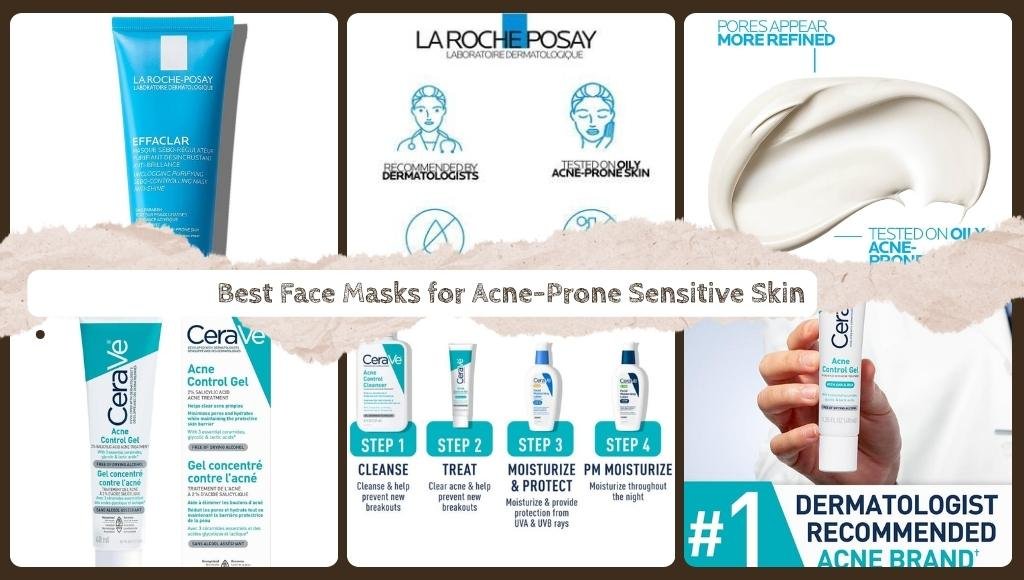
La Roche-Posay Effaclar Clarifying Clay Mask
A French pharmacy formula designed for oily and sensitive skin with acne designed for sensitive skin, this clay formula has a dual composition of kaolin and smectite clays, zinc gluconate, which absorbs excess sebum without disturbing the skin barrier. A cleanser clay mask from La Roche-Posay costs approximately $30 or ₹2500. Avoids parabens, soap and fragrance, it is one of the safest and most effective face masks for sensitive skin with acne in 2026. It is a common recommendation for dermatologists when it comes to the first line of defense to treat reactive skin.
CeraVe Acne Control Gel (short-contact mask application)
A short contact mask that is applied to the skin to treat acne, CeraVe Acne Control Gel application is about $18 / ₹1,500.
CeraVe’s acne gel combines ceramides, niacinamide and the active ingredient salicylic acid, which performs an active skin barrier repair with the help of the salicylic acid’s exfoliating effect. The 5-minute short-contact mask application gently exfoliates the skin without increasing the risk of irritation, making it a dermatologist-recommended option for reactive skin types.
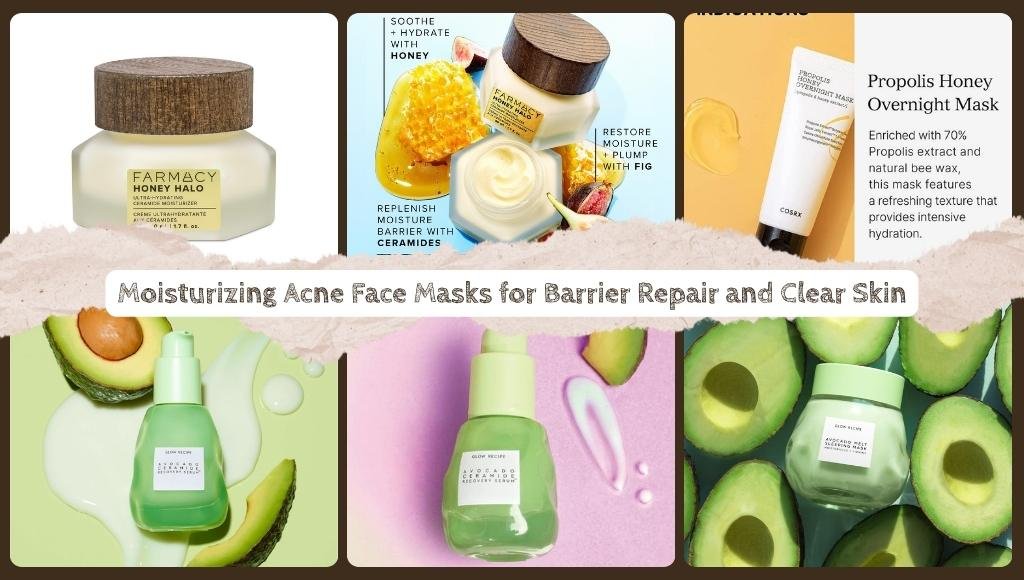
Face Masks for Dry Acne-Prone Skin
Dry acne-prone skin is actually a true paradox, and struggle with it many do. Mask removal can lead to the removal of moisture, increased barrier permeability, and paradoxically increase oil production. If you have this type, opt for moisturizing masks that will combine soothing acne-fighting actives with barrier repair ingredients.
Glow Recipe Avocado Ceramide Recovery Serum Mask
It is a Glow Recipe Avocado Ceramide Recovery Serum Mask, which costs about $45 / ₹3,700.
A hybrid formula that provides ceramides, avocado oil and polyglutamic acid for intensive moisture replenishment and gentle exfoliation with the help of mild exfoliants to treat congestion. It is ideal for dry skin and for acne-prone skin as it restores the skin barrier without clogging the pores. Dermatologists especially recommend it for acne caused by skin barrier damage rather than excess oil production.
Farmacy Honey Halo Ultra-Hydrating Ceramide Mask
Farmacy Honey Halo Ultra-Hydrating Ceramide Mask priced at $48 / ₹3,950
Breathed-enriching mask with natural antibacterial propolis, together with ceramides and honey. It targets bacteria more effectively, delivers antibacterial action to dry skin, and provides intense moisturization.
Use as an overnight face mask once or twice weekly and enjoy softer, clearer and calmer skin in a few weeks.
Key Acne-Fighting Ingredients
Knowing what ingredients to look for in your mask will help you to make informed decisions when shopping and prevent mixing incompatible actives in your mask.
Salicylic acid — A beta-hydroxy acid that works to dissolve the dead cells in pores after penetrating the oil. Ideal for oily, combination skin and blackheads and whiteheads. Recommended effective range: 0.5% – 2%.
Clay mask bases (kaolin, bentonite, smectite) – Absorb excess oil, draw out impurities, and decrease the shine. Perfect for oily skin that has moderate acne. Apply once or twice a week, do not apply if over-dried.
Benzoyl peroxide — This is a clinically-proven antibacterial agent that kills the bacteria in the acne follicle. Pustules and inflammatory acne – highly effective. Typical range: 2.5% to 10%. Begin at a low dose to determine tolerance.
Tea tree oil—An antibacterial and anti-inflammatory compound from plants. Gentle enough for mild acne and those that are sensitive to synthetic actives. Works in a low concentration (5%) of a stable formula.
They are fully tested, recommended, and actively reviewed on YouTube by world-renowned, board-certified dermatologists like Dr. Andrea Suarez (Dr. Dray), Dr. Muneeb Shah, and Dr. Luke Maxfield. These medical experts show these product test on their channels.
Practical Tips for Better Results
Always do a patch test. Put on the lotion on the inside of your arm and leave in for 24 hours before you put a new mask on your face, especially if it has benzoyl peroxide or salicylic acid in it.
Cleanse before masking. Active ingredients cannot penetrate oil, sunscreen and cosmetics. A clean face allows for the maximum amount of absorption.
Increase frequency of session to 2-3 x per week. An excessive amount of masking, particularly clay-based formulations, can damage the skin barrier and lead to the aggravation of acne by the overproduction of oil in response to the barrier disruption.
Always use a moisturizer that is not comedogenic. Acne masks have a natural drying effect. A light, oil-free moisturizer is the best choice for rebalancing to lock in benefits and help keep the skin barrier intact.
Add them individually. Using benzoyl peroxide with a retinoid or two or more acids in a single session greatly increases the risk of irritation. Only use one active in your mask skincare routine and introduce new ones slowly.
Conclusion
There is nothing one can do about acne; it is manageable and can make a difference in just four to six weeks, with the right face mask applied regularly and properly. Acne face masks work best when they contain effective ingredients such as salicylic acid, tea tree oil, benzoyl peroxide, and/or clay and match your skin type. Any skin type or texture will find a mask that works for them, and is effective.
Looking for some action? Select one of the masks listed in this guide that is appropriate for your skin type and start using it this week! Your skin is worth for such investment.
Also Read: Dot & Key: The Key to Unlock Fresh & Glowing Skin
FAQs : best face masks for acne
The optimal face mask for acne treatment will depend on your type of skin and severity of the blemishes. A clay mask and salicylic acid mask will work well for oily skin and blackheads. If you have inflammatory pustules and papules, a benzoyl peroxide formula will work faster. If you have sensitive skin, La Roche-Posay Effaclar Clay Mask is a time-tested dermatologist’s favorite.
Most skin types need between 2-3 maskings a week. Clay masks that are applied on a daily basis deplete the barrier function and can lead to a response from the skin in the form of increased oil production, causing acne. For more soothing, hydrating masks, three to four treatments per week should be fine.
Yes. Benzoyl peroxide is one active that is clinically proven and extensively studied in acne therapy. It is able to directly kill the acne causing bacteria inside the hair follicle and significantly reduce inflammatory lesions in 2-4 weeks of regular use. Test at a lower concentration (2.5% to 5%), to reduce the chances of dryness and peeling.
Absolutely. Select masks that are formulated with a combination of acne fighting ingredients and hydrating and barrier repairing ingredients like ceramides, hyaluronic acid or propolis. Strong clay masks should not be used more than nightly, and should be followed with a good non comedogenic moisturizer to prevent any damage to the skin barrier.
When used in properly diluted skin care products (usually no more than 5% of tea tree oil) it’s safe and effective. Provides natural antibiotic and anti-inflammatory properties to combat mild acne, and is ideal for sensitive skin users. Avoid using undiluted tea tree oil on skin; can cause burns and irritation.