
Dry skin has been something that has left a lot of people bothered and unhappy over the years. The thing with dry skin and sunscreen is a real, hard, complicated relationship. No one likes chalky finishes and tight after-feels with flaky makeup. Imagine your dress is top-tier but your makeup isn’t – what’s the point of getting that expensive dress if your face makes you look like Bridezilla?
Thankfully, modern sunscreens have evolved, and today’s formulas are as much about hydration and glow-ups as they are about protecting the skin.
If your skin leans towards the dry, dehydrated or sensitive side, then choosing the right sunscreen can genuinely transform how your skin looks and feels throughout the day.
This article will cover a dermatologically approved and informed guide on the best sunscreen for dry skin. This will cover how to choose one that actually works for you.
Why your dry skin absolutely needs a best sunscreen

Dry skin basically lacks the natural oils and moisture-retaining lipids. It is also important to note that the sun’s exposure only makes things a lot worse. The ultimate result is that you’re basically looking at faster moisture loss, irritation, fine lines, and a lot of dullness that isn’t even welcome.
Fortunately, a good sunscreen for dry skin ends up doing a lot of things, such as:
- Protect your skin against UVA and UVB sun rays, thus reducing the chance and risk of skin cancer
- It locks in moisture for long hours, thus protecting your skin
- With sunscreen, you are able to strengthen the skin barrier
- Interestingly, the sunscreen also sits pretty well under makeup, and it reduces the chance of pilling and patchiness.
You see, sunscreen is much more than just protection or defense for your skin. It’s also a glow booster that combats dryness-induced dullness. This ends up revealing a supple skin that glows from within. For dry skin in humid Indian climates, sunscreen is a complete must, and it prevents tan lines. Pairing SPF with hydration keeps your pores refined and also reduces the appearance of fine lines. When you pair this with makeup, your primer and foundation will glide for the perfect red-carpet look without even trying too hard.
What Dermatologists Recommend for Dry Skin

Sunscreen is known to us before we even existed -it is one of the most essential products in skincare, considering the anti-ageing properties. Although the moisturizers and serum work as an anti-ageing product as well, it does a lot more than just that.
Dermatologists often advise dry-skin users to be careful the most. They ask users to avoid any harsh, alcohol-heavy sunscreens and instead to opt for formulas with hydrating and soothing ingredients.
Key ingredients that dermatologists recommend and ask us to watch out for include:
- Hyaluronic Acid, as it attracts and retains moisture and locks it in.
- Ceramide,s as they repair the skin barrier, thus making it supple
- Glycerin prevents the loss of moisture
- Shea Butter or Squalane, as this adds nourishment and makes the skin feel soft and gentle
- Aloe Vera and Niacinamide as this brings relief to irritated skin and soothes it.
These ingredients ensure that your sunscreen doesn’t just protect – it actually cares and makes you look like ten years younger!
Best Types of Sunscreen for Dry Skin
The best sunscreen is not a particular name or brand – it works as per the type of skin you have. However, several brands offer a wide array of types of sunscreens that are available in the market. These include:
Cream-Based Sunscreens

Cream based sunscreens are quite ideal for dry skin because they are rich in texture and bring in more nourishment than the typical gels and spray forms. They can blend seamlessly and leave your skin feeling soft without the oily look.
Best suited for: very dry or flaky skin.
Lotion Sunscreens with SPF 30 or 50

We all know about SPF 30 and 50 – there must be at least one person in your family who uses it. They are popular because they are lightweight yet hydrating, and the lotion sunscreens are perfect for daily use. They absorb well,and they don’t feel greasy at all. This makes them a fan-favorite for daily office and college use.
Best suited for: Normal to dry skin, with a daily routine.
Mineral Sunscreens with a Moisturising Base
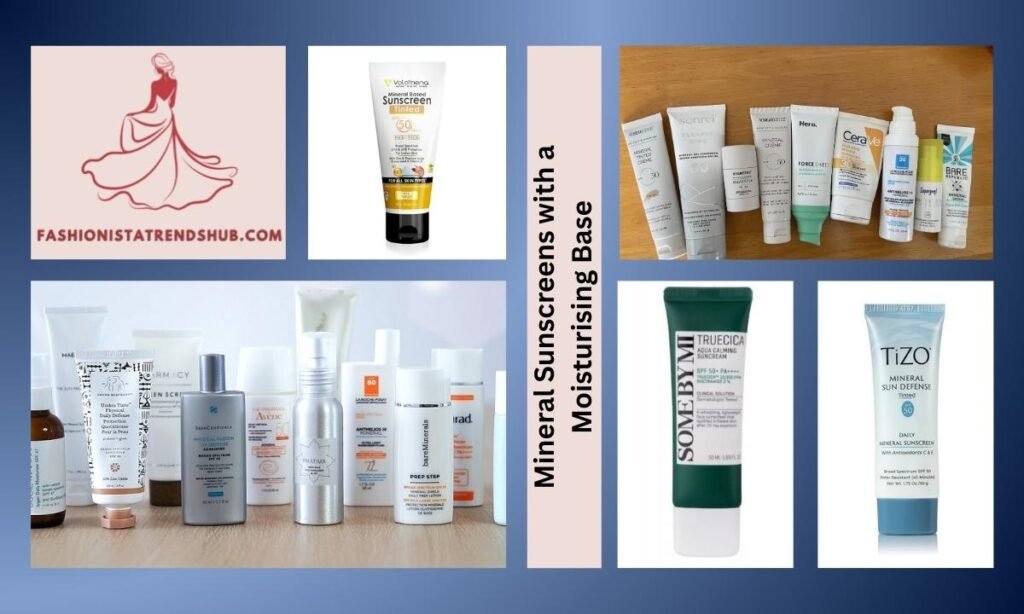
Mineral sunscreens, also called physical sunscreens, have zinc oxide or titanium dioxide. These are gentle and ideal for sensitive and dry skin. This is especially the case when infused with oils and butters.
Best suited for: Sensitive, reactive dry skin
Benefits of Using best Sunscreen for Dry Skin
It’s no secret that the skin gives ultimate benefits to the skin that will help you ten years down the line. Some of the unbeatable benefits of sunscreen are following AM routine includes:
- When you incorporate an SPF 30/50 into your skincare regimen, you can rest assured that it’s protecting you from harmful UVA rays. These have an adverse impact on the skin’s collagen, which is a key reason for preventing skin wrinkles and fine lines.
- Using SPF helps decrease melanin production, and this also controls pigmentation and melasma.
- It also reduces dark spots and marks on the skin, and this prevents the skin from tanning naturally.
- Even when using active ingredients like Vitamin C, retinol, niacinamide, etc., using them with sunscreen helps in giving better results.
- Helps in maintaining skin tone and texture.
Best type of Sunscreen for you, depending on your skin type

| Skin Type | Best Type of Sunscreen | Why It Works for you |
| Oily Skin | The best bet is Gel-based, Matte finish, Oil-free sunscreen | This helps control excess oil, prevents breakouts, and also feels lightweight |
| Dry Skin | Cream-based, Hydrating sunscreen | This helps lock in moisture and prevents flakiness |
| Combination Skin | Lightweight lotion or water-based sunscreen | It helps balance out dry and oily areas without heaviness. |
| Sensitive Skin | Mineral sunscreen (Zinc Oxide/Titanium Dioxide) | Gentle, non-irritating, and reduces reactions |
| Acne-Prone Skin | Non-comedogenic, Gel sunscreen | This doesn’t clog pores or trigger new acne on the irritated skin. |
| Pigmented Skin | Broad-spectrum SPF 50 (PA++++) | This prevents dark spots & further pigmentation |
| Normal Skin | Lotion or gel sunscreen | It helps maintain skin protection without altering balance |
| Mature / Aging Skin | Sunscreen with antioxidants | Protects against fine lines & sun damage |
| Outdoor / Sweaty Skin | Water & sweat-resistant sunscreen | Is longer-lasting protection during activities |
The Dos and Dont’s of Applying Sunscreen
| Do’s | Don’ts |
| Apply sunscreen every day. This is even on cloudy days or when indoors | Don’t skip sunscreen just because you’re staying indoors as this can have a bad effect |
| Use a broad-spectrum sunscreen that protects against harmful UVA and UVB rays | Don’t use sunscreens that only mention SPF without UVA protection |
| Apply sunscree 15–20 minutes before stepping out in the sun. This gives enough time for the protection to work its magic. | Don’t apply sunscreen right before sun exposure as this won’t protect you. |
| Use the two-finger rule for face and neck to ensure adequate coverage | Don’t use too little product — under-application reduces protection |
| Choose a sunscreen that is suited to your skin type (hydrating for dry skin, gel for oily skin, etc.) | Don’t use a one-type-fits-all formula without checking your skin needs |
| Reapply sunscreen every 2–3 hours, if needed. This is especially true if you go outdoors a lot | Don’t assume one application lasts all day because it literally does not. |
| Layer sunscreen as the last step of your skincare routine. | Don’t mix sunscreen directly with moisturiser or foundation |
| Use sunscreen on exposed areas like ears, neck, hands, and feet as they also need protection | Don’t forget commonly missed areas like eyelids and hairline |
| Opt for water-resistant formulas if swimming or sweating. | Don’t rely on non-water-resistant sunscreens during workouts or beach days |
| Remove sunscreen properly with a gentle cleanser at the end of the day | Don’t sleep with sunscreen on your skin – this might give adverse results |
How to Apply Sunscreen for Dry Skin – the right way!
You should know that even the best sunscreen won’t work if you can’t apply it the correct way. Here is a multi step checklist and routine to follow when you apply sunscreen:
- Cleanse your face first with a gentle, non-foaming cleanser
- Apply a hydrating moisturiser and serum next
- Follow this up with the application of sunscreen.
- Wait 2-3 minutes before you apply makeup products.
- Reapply every 2-3 hours if needed.
Best Sunscreen for Dry Skin – Brands and prices decoded!
| Brand | Product Name | Rating | Why It’s Good for Dry Skin | Approx. Price (₹)/50mg |
| Deyga | Deyga Sunscreen | (4.5) | Creamy texture, natural oils, long-lasting hydration | ₹695 |
| Cetaphil | Cetaphil Sun Light Gel | (4.4) | Dermatologist-recommended, gentle and moisturising | ₹1,100 |
| La Roche-Posay | Anthelios Invisible Fluid | (4.8) | High protection, hydrating, sensitive-skin friendly | ₹2,200 |
| Re’equil | Ultra Matte Dry Touch Sunscreen | (4.3) | Barrier-safe; works well when layered over moisturiser | ₹780 |
| Minimalist | SPF 50 PA++++ Sunscreen | (4.5) | Ceramides & hyaluronic acid support dry skin | ₹399 |
| Aqualogica | Hydrate+ Sunscreen | (4.4) | Lightweight hydration, dewy finish | ₹399 |
| Dot & Key | Watermelon Cooling Sunscreen | (4.2) | Hydrating, makeup-friendly glow | ₹595 |
| Dr Sheth’s | Ceramide & Vitamin C Sunscreen | (4.3) | Strengthens skin barrier, adds radiance | ₹499 |
| Neutrogena | Ultra Sheer Dry-Touch Sunscreen | (4.1) | Effective protection; needs moisturiser for dry skin | ₹699 |
| Forest Essentials | Sunscreen Lotion | (4.6) | Nourishing ayurvedic oils, luxe feel | ₹1,950 |
Conclusion
For dry skin, sunscreen is not really optional. It is actually considered essential skincare. The right formula won’t just protect your skin from tanning or premature ageing. It will also boost hydration, smooth texture,a nd also enhance your natural glow.
Next time you go out, make sure you bring your glam with you by applying sunscreen at least 2-3 hours before. It’s like the final, fashionable step in your skincare routine – and it keeps your skin looking young, supple and luminous!
FAQs
Sunscreen is not part of makeup. It is part of a skincare regimen.
No, it is to be applied after you put skin moisturizer/serum. After that, you apply primer and foundation
Yes absolutely. It is a must but the type will differ as per your skin type.
Refresh Date: February 3, 2026